
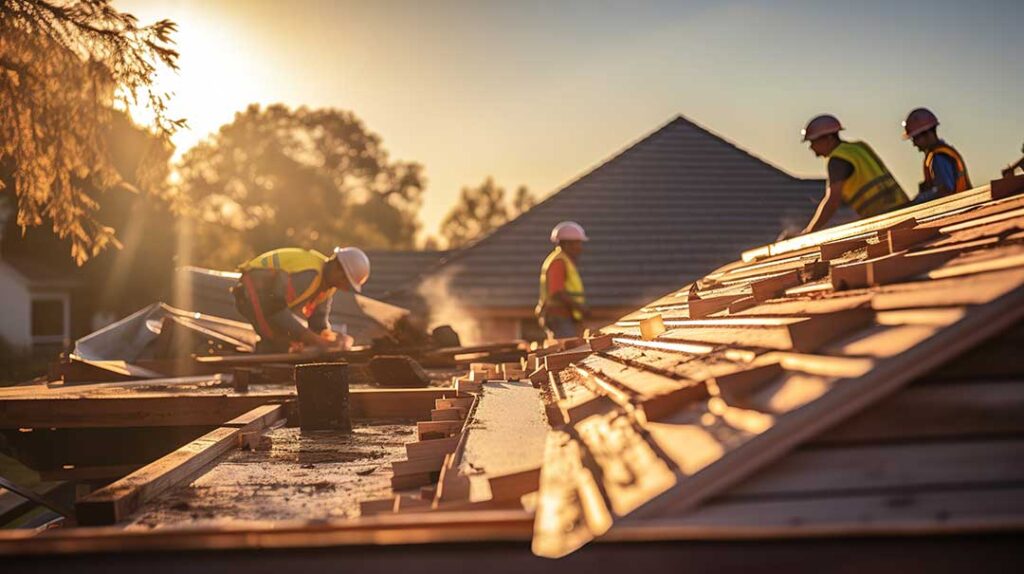
A roof cricket is a small, raised structure built on the uphill side of a chimney or another roof obstruction. Its job is to split water, snow, and debris so they move around the obstruction instead of collecting behind it.
For homes in Salamanca, NY, a cricket can be especially useful because roofs regularly face snow accumulation, freeze-thaw cycles, wind-driven rain, and falling leaves. Although a cricket may look like a minor roof detail, its design can strongly affect how well the surrounding roof sheds water.
What is a roof cricket?
A roof cricket is a peaked, wedge-shaped section of roofing installed behind a chimney or similar obstruction. It resembles a small secondary roof that rises toward the uphill side of the chimney and slopes down toward both sides.
The cricket creates two drainage paths:
- Water is directed around the left and right sides of the chimney.
- Snow and ice are less likely to remain packed against the chimney’s uphill wall.
- Leaves and other debris have fewer opportunities to form a permanent dam.
- Flashing can be shaped around the cricket to provide a more reliable water barrier.
The terms “roof cricket” and “chimney saddle” are often used interchangeably. A saddle usually refers to the structural or sloped portion behind the chimney, while a cricket may refer to the complete assembly, including framing, sheathing, roofing, and flashing.
Why is a cricket needed behind a chimney?
A chimney interrupts the natural downhill flow of water. Without a diversion structure, rain traveling down the roof reaches the chimney and can collect along its uphill side.
That trapped water may work its way beneath flashing, especially if the flashing is old, poorly fitted, corroded, or damaged by ice movement. Over time, moisture can affect roof decking, framing, insulation, interior ceilings, and masonry.
A chimney cricket reduces this problem by giving water a sloped route around the obstruction. It also helps prevent the chimney from acting like a wall that holds back snow and debris.
Not every chimney requires a cricket. The need depends on factors such as:
- Chimney width
- Roof slope
- Roof layout
- Local snowfall and drifting patterns
- The type and condition of the flashing
- Building requirements that apply to the construction
A narrow chimney on a steep roof may shed water adequately with properly designed step flashing and counterflashing. A wider chimney on a lower-slope roof is more likely to benefit from a cricket.
How does a cricket protect a roof during winter?
Winter conditions make chimney drainage more complicated. Snow can build up against the uphill side of a chimney, then partially melt during warmer periods. The resulting water may refreeze at the lower edge of the snow or inside small gaps in the flashing.
In the Salamanca area, repeated changes between freezing and thawing can place stress on roofing materials and metal flashing. A cricket helps by:
- Reducing the amount of snow that rests directly against the chimney
- Encouraging meltwater to move sideways and downhill
- Limiting the formation of hidden ice dams behind the chimney
- Reducing standing moisture near roof penetrations
A cricket does not eliminate ice dams across the entire roof. It only improves drainage around the obstruction. Proper attic insulation, air sealing, ventilation, and roof-edge drainage remain important parts of winter roof performance.
What does a roof cricket look like?
From above, a cricket usually looks like a small triangular or peaked roof attached to the uphill side of a chimney. Its highest point is near the upper roof surface or chimney centerline, and its sides slope downward toward the roof edges.
From the ground, the cricket may be difficult to see because it is covered with the same type of shingles, membrane, or metal used on the surrounding roof. The most visible features may be the metal flashing along the chimney and the raised ridge behind it.
The structure beneath the roofing may include:
- Framing lumber or engineered framing components
- Roof sheathing
- Underlayment
- Ice-and-water protection in vulnerable areas
- Step flashing and counterflashing
- Shingles, metal roofing, or another compatible roof covering
The exact design should match the roof’s slope, drainage pattern, and covering material.
What happens if a chimney has no cricket?
A chimney without a cricket is not automatically defective. Some roofs are designed to drain properly without one. However, a missing cricket can be a concern when the chimney is broad, the roof slope is relatively low, or the area behind the chimney repeatedly holds water, snow, or debris.
Possible warning signs include:
- Water stains on the ceiling or walls near the chimney
- Damp insulation in the attic
- Soft or discolored roof decking
- Rusted or separated flashing
- Missing roofing material behind the chimney
- Moss or algae growth concentrated at the uphill side
- Snow that remains piled against the chimney after surrounding areas have cleared
- Recurring leaks that appear after wind-driven rain or thawing weather

Interior staining may not appear directly below the chimney. Water can travel along rafters, roof decking, insulation, or framing before entering the living space.
Is a cricket the same as chimney flashing?
No. A cricket and flashing perform different jobs, although they work together.
The cricket changes the shape of the roof so water can flow around the chimney. Flashing seals the joints where the chimney meets the roofing. A properly built cricket still needs correctly installed flashing.
Common flashing components include:
- Step flashing along the sides of the chimney
- Headwall or apron flashing at the downhill side
- Counterflashing cut into or attached to the chimney
- Specially shaped metal at the cricket ridge and valleys
Replacing flashing without addressing a drainage problem may provide only a temporary improvement. Likewise, building a cricket without integrating it properly with the flashing can leave vulnerable seams.
Can a cricket be added to an existing roof?
In many cases, a cricket can be added during a roof replacement or a carefully planned repair. The work typically requires removing roofing around the chimney, constructing the sloped form, installing appropriate underlayment and flashing, and tying the new roof covering into the existing surface.
Adding one can be more complicated when:
- The chimney masonry is deteriorated
- The roof structure has water damage
- The chimney is very close to a ridge or valley
- Multiple roof slopes meet at the chimney
- The existing roof covering is brittle or difficult to match
- Snow and ice protection is missing around the penetration
Any structural changes should be evaluated for safety and compliance with applicable building requirements. A roof opening, chimney, and elevated work area can create serious hazards, particularly during icy or windy conditions.
How should a roof cricket be maintained?
A cricket should be checked as part of normal roof and chimney maintenance, especially after winter and major storms. The main focus is not the cricket structure alone, but the complete drainage and flashing assembly.
Look for:
- Open or lifted flashing
- Cracked sealant at exposed joints
- Loose shingles or damaged metal roofing
- Rust holes or corroded metal
- Debris buildup in the cricket valleys
- Masonry cracks near the counterflashing
- Water stains or damp materials in the attic
Avoid attaching ladders to chimney flashing or walking on snow-covered roofing. From the ground, binoculars can help identify obvious damage, but hidden deterioration often requires an attic or roof-level inspection.
A well-designed cricket is a practical drainage feature, not merely an architectural detail. By directing water and snow around a chimney, it helps protect the flashing, roof structure, and interior of the home—particularly in a climate where winter accumulation and repeated thawing can expose small weaknesses.
