
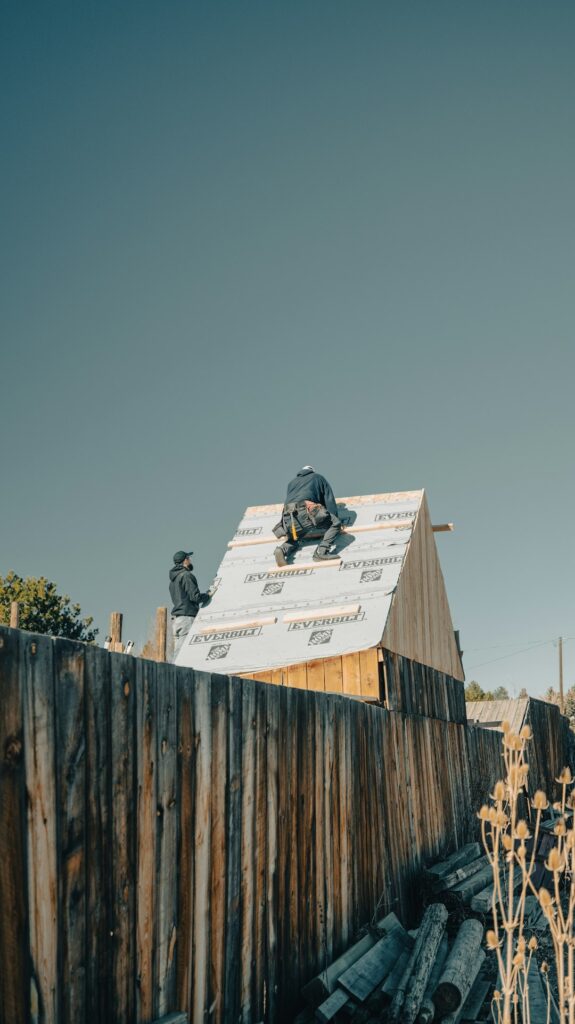
Roof repairs are easier to manage when the company is evaluated before any work begins. The right choice is not always the lowest bid; it is the roofer who can accurately identify the cause of the problem, explain the repair clearly, follow local requirements, and provide written details about the work.
How can a homeowner tell whether a roofing company is qualified?
Start by checking whether the company can provide basic business and project information without hesitation. A qualified roofing company should be willing to explain its experience with the roof type involved, identify who will perform the work, and provide proof of insurance when requested.
Ask for:
- General liability insurance
- Workers’ compensation coverage for employees
- A written description of the repair
- References for similar repair projects
- The expected start date and approximate work duration
- Information about workmanship warranties
Insurance matters because roof work involves ladders, tools, falling materials, and the possibility of property damage. A homeowner should not assume that a company’s insurance covers every worker or subcontractor on the site. If subcontractors will be used, ask how their coverage is handled.
A long operating history can be useful, but it is not the only measure of quality. A newer company may still perform careful work, while an established company may not be the right fit for every repair. Clear communication, documentation, and a sound repair plan are more meaningful than a polished advertisement.
What should a roofing inspection include?
A proper inspection should look beyond the visible leak. Water may enter at one location and appear inside the home several feet away, especially around attic spaces, insulation, rafters, chimneys, vents, and roof edges.
The inspection should consider:
- Shingles, metal panels, or other roof coverings
- Flashing around chimneys, vents, skylights, and wall intersections
- Valleys where roof sections meet
- Drip edges and gutters
- Roof penetrations and sealants
- Ventilation and signs of trapped moisture
- Soft decking or damaged structural materials
- Interior stains, damp insulation, or mold-like growth
A useful repair explanation identifies the likely source of the water, not just the place where a stain is visible. Be cautious if an inspection consists only of a quick glance from the ground or if the proposed repair is presented before the roof has been examined closely.
Photographs can make the discussion clearer. The company should be able to show damaged materials or explain why a particular area requires attention. A homeowner does not need to understand every roofing term, but the reasoning behind the repair should make sense.
Should the repair be temporary or permanent?
The answer depends on the condition of the roof and the urgency of the damage. A temporary measure may be appropriate after storm damage, during freezing weather, or when water is actively entering the home and a lasting repair cannot safely be completed immediately.
A written proposal should distinguish between:
- Emergency protection
- Temporary patching
- A permanent repair
- Replacement of a larger roof section
- A complete roof replacement
Temporary coverings and sealants can limit water intrusion, but they are not always durable solutions. Repeated patching may also hide deteriorated decking, failing flashing, or widespread aging. A trustworthy company should explain the expected service life of the proposed repair and what conditions could cause it to fail.
In many older homes, the visible roofing material is only one part of the problem. The underlying wood may have softened after years of moisture exposure, or several layers of roofing may make a simple patch ineffective. Those possibilities should be discussed before work starts.
What should be compared between roofing estimates?
Compare the scope of work, not just the total price. Two estimates may have very different prices because one includes replacement of damaged decking, new flashing, disposal, or interior protection while the other covers only a small patch.
A detailed estimate should state:
- The exact roof area or component being repaired
- Materials to be used
- Whether damaged decking will be replaced
- How flashing will be repaired or replaced
- Whether cleanup and disposal are included
- Labor charges and payment schedule
- Any exclusions or conditions that could change the price
- Warranty terms and who is responsible for follow-up repairs

Be cautious with a large deposit, pressure to sign immediately, or a price that changes substantially after work begins without a documented reason. Unforeseen damage can occur, particularly after materials are removed, but the homeowner should be told what was found and why the added work is necessary.
It is reasonable to obtain more than one written evaluation for a significant repair. The purpose is not to create a bidding contest but to compare diagnoses and determine whether the recommendations are consistent.
Does the roofing company need to follow local permit requirements?
Homeowners should ask who will determine whether a permit is required and who will obtain it. Salamanca lists roof repair and roof replacement among work categories handled through its code enforcement process, with separate permit classifications and fees.
Permit requirements can depend on the type and extent of work. Replacing a few shingles may be treated differently from replacing a roof covering, altering structural materials, changing roof slopes, or repairing areas affected by larger building modifications. The safest approach is to verify the current requirement with the local code enforcement office before work begins.
A permit does not guarantee excellent workmanship, but ignoring permit rules can create problems during future property transactions, insurance inquiries, or inspections. The responsible party should also know whether an inspection is required after the work is completed.
Why does local weather matter for roof repairs?
The local climate makes material selection and timing especially relevant. Homes in Salamanca experience substantial winter snowfall, repeated freeze-thaw cycles, wind, spring moisture, and occasional ice buildup. These conditions can expose weak flashing, clogged drainage, poorly sealed penetrations, and inadequate ventilation.
Ask how the proposed repair addresses:
- Snow and ice accumulation
- Water backing up at roof edges
- Expansion and contraction during temperature changes
- Wind-driven rain
- Ventilation and attic moisture
- Safe installation during cold or wet conditions
Roof work performed in unsuitable temperatures may affect how some materials seal or adhere. Winter repairs may be necessary, but the company should explain whether the work is intended as emergency protection or a lasting installation.
The age and design of the home also matter. Older housing may have additions, steep sections, enclosed porches, or roof transitions that require careful flashing work. A repair plan should account for the entire drainage path rather than treating each leak as an isolated spot.
What warning signs suggest a poor choice?
Several warning signs deserve attention:
- No written estimate or unclear scope
- Refusal to provide insurance information
- Pressure to decide immediately
- Requests for full payment before work starts
- Unexplained material substitutions
- Claims that permits are never necessary
- No plan for cleanup or property protection
- A promise to repair every leak without inspecting the attic or roof system
- A proposal based only on photographs when an in-person inspection is practical
- A price that is dramatically lower without a clear explanation
Good roofing work begins with an accurate diagnosis and ends with documentation. Keep copies of the estimate, permit information, invoices, photographs, warranty terms, and records of any changes made during the project. Those records can help clarify responsibility if a leak returns or additional damage is discovered later.
The most reliable decision is usually the company that explains the problem in plain language, separates emergency work from permanent repairs, respects local requirements, and provides enough detail for the homeowner to make an informed choice.
